How to Source Products Directly from Manufacturers Without a Middleman
For retailers, wholesalers, distributors, and growing businesses, finding the right supplier can have a major impact on profit margins and product quality. Buying through multiple layers of traders or agents can increase the final product cost and make it harder to maintain consistent quality.
Learning how to source products directly from manufacturers can help businesses negotiate better prices, communicate directly with factories, customize products, and build long-term supplier relationships.
However, direct sourcing also comes with challenges. Not every supplier claiming to be a manufacturer actually operates a factory, and sending an advance payment without proper verification can create unnecessary risks.
This guide explains how businesses can identify genuine manufacturers, verify suppliers, negotiate wholesale prices, and avoid common sourcing mistakes.
Why Cut Out the Middleman?
One of the biggest advantages of buying directly from manufacturers is better control over the purchasing process.
When products pass through several intermediaries, each party may add its own margin. Direct sourcing can potentially reduce these additional costs and give buyers more flexibility when negotiating bulk orders.
Some key benefits include:
Better Wholesale Pricing
Manufacturers generally have more control over their production costs and may offer competitive pricing for bulk orders. By communicating directly with the factory, buyers can negotiate based on order quantity, product specifications, packaging, and repeat business.
Direct Communication
Working directly with a manufacturer allows you to discuss product specifications, materials, packaging, branding, quality standards, and production timelines without relying on multiple intermediaries.
Better Quality Control
Direct communication can make it easier to define quality requirements and request product samples before placing a large order.
Customization Opportunities
Manufacturers may offer private-label products, customized packaging, specific colors, materials, dimensions, or other product modifications depending on their capabilities and minimum order quantities.
Long-Term Supplier Relationships
If a manufacturer consistently meets your requirements, building a direct relationship can make future purchasing easier and more predictable.
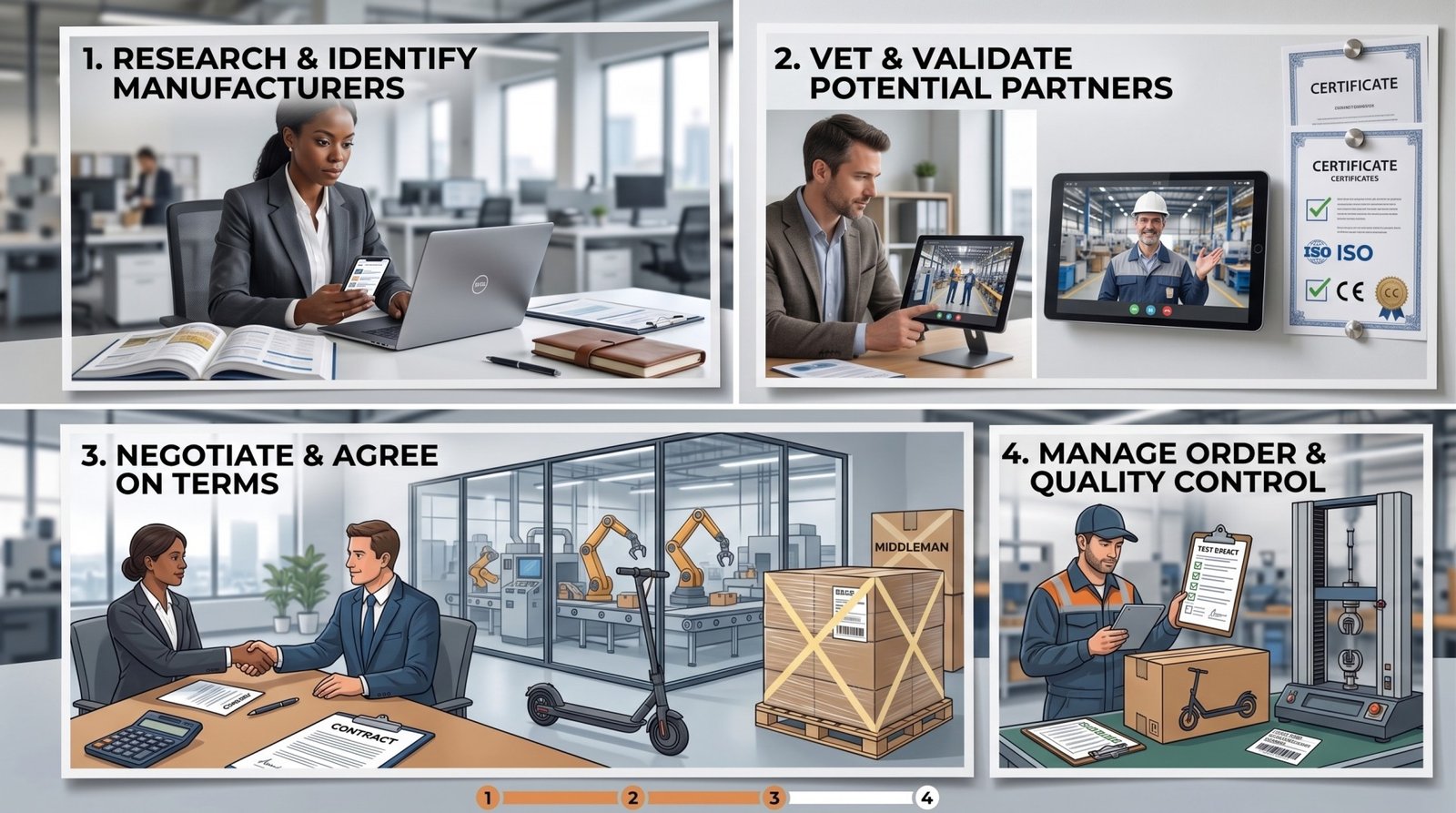
Step 1 — Identifying Genuine Manufacturers
The first step is finding suppliers that actually manufacture the products you want to purchase.
Start by defining your requirements clearly. Include the product name, specifications, estimated quantity, target price, packaging requirements, and destination market.
You can then search through B2B marketplaces, manufacturer directories, trade fairs, industry associations, business websites, and supplier networks.
When evaluating a potential manufacturer, look for:
-
Company registration and business details
-
Factory or manufacturing facility information
-
Product catalogue
-
Manufacturing capabilities
-
Minimum order quantity (MOQ)
-
Production capacity
-
Export experience
-
Quality certifications, where relevant
-
Business address and contact details
-
Product samples
-
Existing customer or business references
Do not rely only on a supplier's marketplace profile or online listing. A professional-looking profile does not automatically prove that the company owns or operates a manufacturing facility.
Ask the Right Questions
Before moving forward, ask the supplier questions such as:
-
Are you the manufacturer or a trading company?
-
Where is your factory located?
-
What is your monthly production capacity?
-
What is your MOQ?
-
Can you provide samples?
-
Can you customize the product?
-
What quality checks do you perform?
-
What are your payment terms?
-
Do you have experience exporting to India?
-
Can you provide business and tax registration documents?
The answers can help you understand whether the supplier is suitable for your requirements.
Step 2 — Verifying a Supplier Before You Pay
Finding a potential manufacturer is only half the process. Supplier verification is critical before sending money or placing a large order.
First, verify the company's legal identity and business information. Check whether the company name, address, bank details, website, invoices, and registration information are consistent.
For international suppliers, request relevant company registration and export documents where applicable. For Indian suppliers, buyers can also verify applicable business and tax details through official government or regulatory channels.
Request a Product Sample
A sample can help you evaluate:
-
Material quality
-
Product dimensions
-
Finish and appearance
-
Packaging
-
Functionality
-
Branding
-
Overall manufacturing quality
Avoid placing a large order solely based on product photographs.
Consider a Factory Inspection
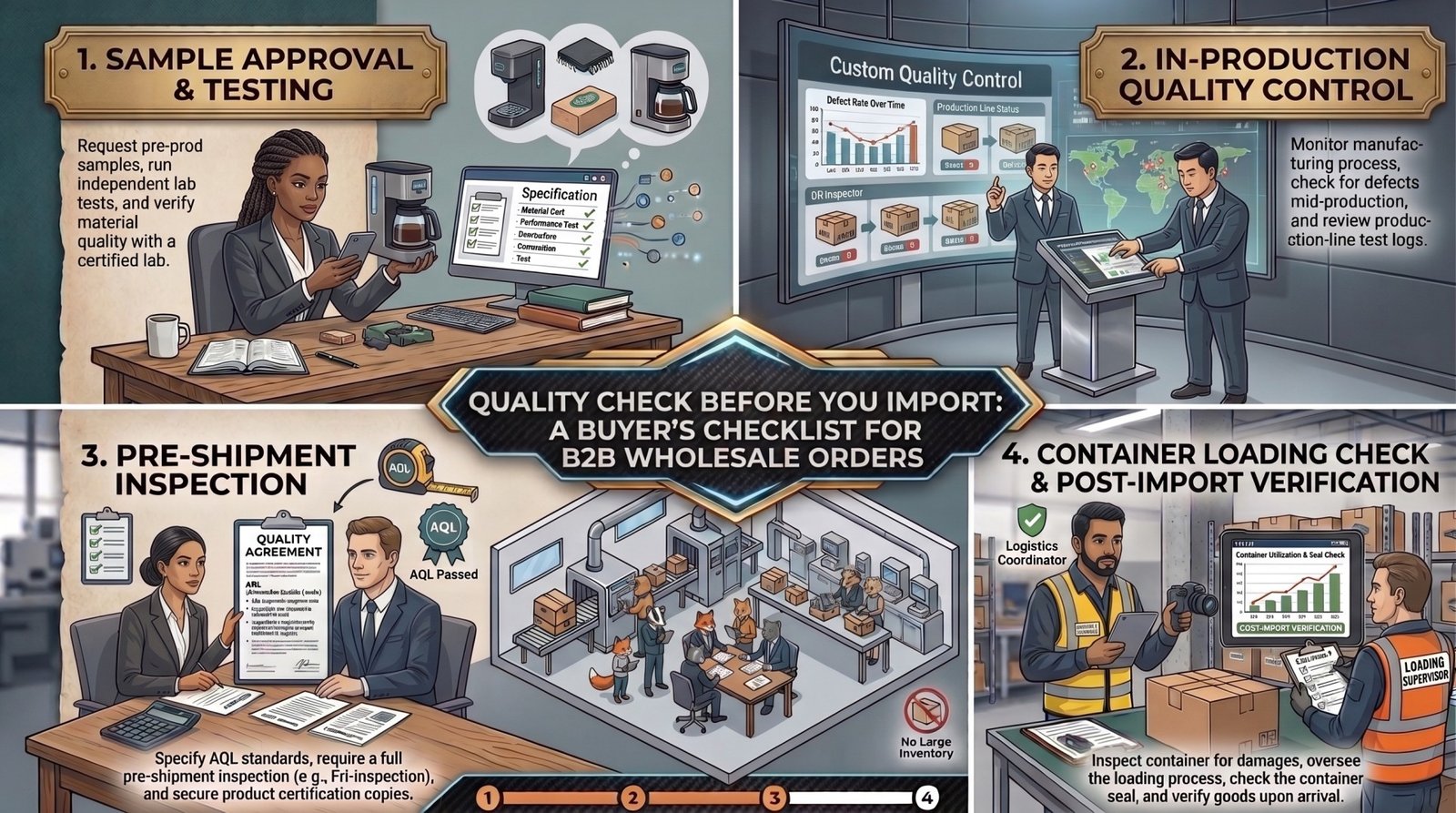
For larger orders, a factory inspection or independent third-party inspection can provide additional confidence.
An inspection can help verify whether the factory exists, understand its production setup, and identify potential quality-control issues before shipment.
Verify Bank Details Carefully
Payment fraud is one of the major risks in international sourcing.
Before making a payment, carefully verify:
-
Beneficiary name
-
Bank account details
-
Company name
-
Invoice information
-
Payment terms
-
Any recent changes to banking details
If a supplier suddenly asks you to transfer money to a different personal or unrelated company account, stop and verify the request independently.
Step 3 — Negotiating Wholesale Pricing
Once you have identified and verified a suitable manufacturer, the next step is negotiating commercial terms.
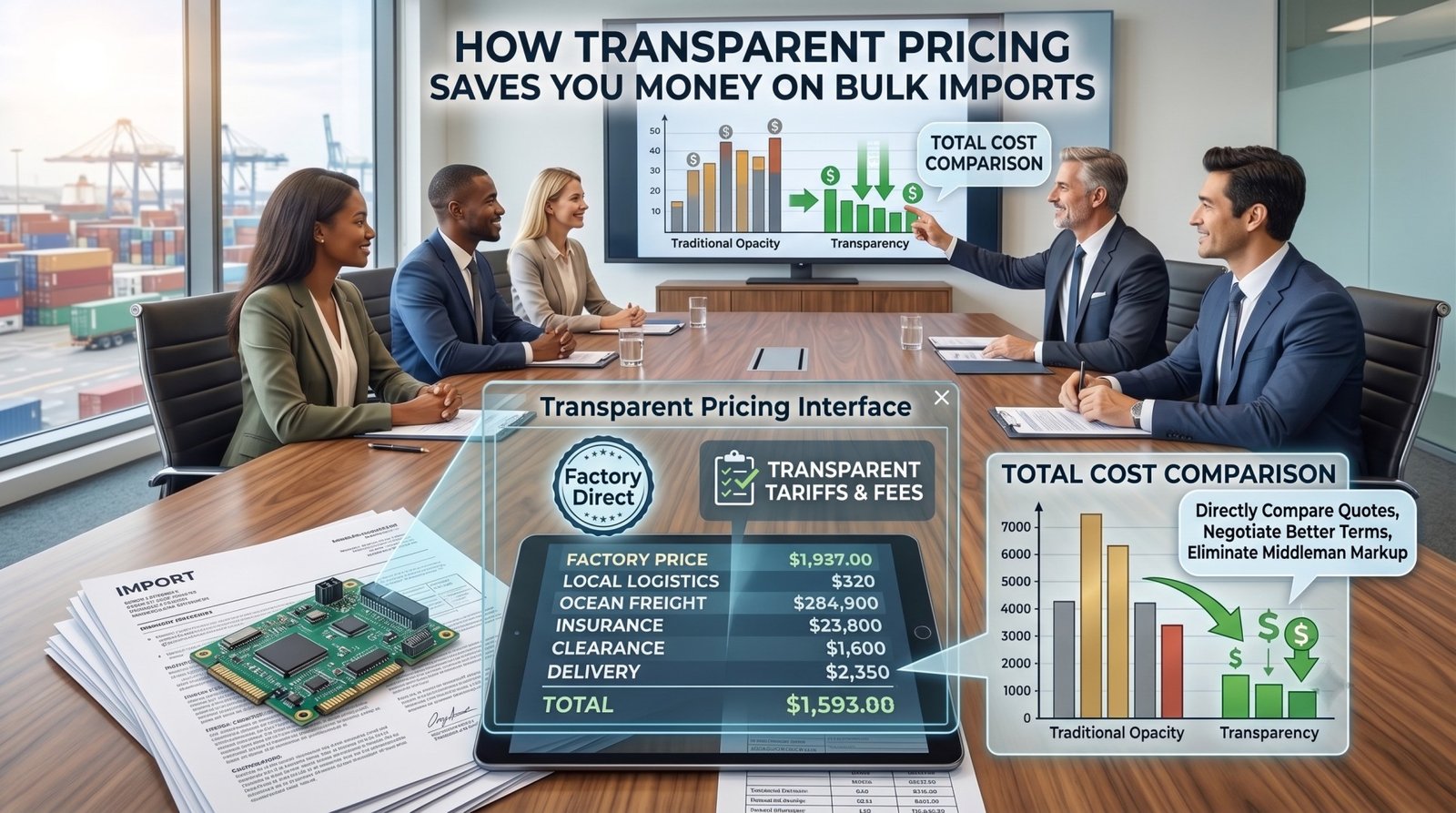
Do not focus only on the unit price. The actual landed cost can also include packaging, shipping, insurance, customs duties, taxes, inspection charges, documentation, and other expenses.
Ask suppliers to provide a detailed quotation covering the complete order.
Factors That Can Affect Wholesale Price
Manufacturers may consider:
-
Order quantity
-
Product specifications
-
Raw material
-
Packaging
-
Customization
-
Branding
-
Production timeline
-
Payment terms
-
Shipping method
-
Repeat-order potential
Instead of simply asking, "What is your lowest price?", provide your expected order volume and specifications.
For example, you can ask for quotations for different quantities such as 500, 1,000, and 5,000 units. This allows you to compare how the unit price changes with volume.
Negotiate More Than Just Price
You can also negotiate:
-
MOQ
-
Payment terms
-
Sample charges
-
Packaging
-
Lead time
-
Replacement policy for defective products
-
Inspection arrangements
-
Shipping terms
-
Custom branding
A slightly higher unit price may sometimes be worthwhile if the supplier offers better quality, reliable delivery, or more flexible terms.
Common Red Flags to Avoid
Direct sourcing can reduce costs, but rushing into a supplier relationship can create serious problems.
Watch out for these common warning signs:
Extremely Low Prices
If a quotation is dramatically lower than comparable suppliers, investigate before proceeding. An unusually low price can indicate poor quality, hidden costs, misleading specifications, or fraud.
Refusal to Provide Basic Company Information
A legitimate business should generally be able to provide reasonable information about its company, products, and commercial terms.
Pressure to Pay Immediately
Be cautious if a supplier creates unnecessary urgency or claims that the price is available only for an extremely short period.
Unusual Payment Requests
Be careful with requests for payments to personal accounts, unrelated companies, cryptocurrency wallets, or accounts that do not match the supplier's verified business details.
No Samples
If the supplier refuses to provide a sample when one is reasonably possible, consider this a warning sign, particularly for a large or customized order.
Inconsistent Information
Check whether the company name, website, email domain, invoice, bank account, factory address, and registration details match.
No Clear Quality or Replacement Terms
Before placing an order, clarify what happens if products arrive damaged, defective, incomplete, or different from the agreed specifications.
How Importwale Simplifies Direct Sourcing
Finding manufacturers, comparing suppliers, verifying business information, negotiating commercial terms, and coordinating purchases can take significant time, especially for businesses that are new to importing or wholesale procurement.
Importwale is designed to simplify the B2B sourcing process by helping businesses connect with suppliers and explore products for their procurement requirements.
Instead of depending entirely on multiple layers of intermediaries, businesses can use a structured sourcing process to discover potential suppliers, compare available options, and communicate their requirements more efficiently.
Whether you are a retailer looking for bulk inventory, a wholesaler searching for new product categories, or a business looking for customized products, direct manufacturer sourcing can help create a more transparent procurement process.
The key is to combine direct sourcing with proper supplier verification, sample testing, clear specifications, secure payment practices, and appropriate quality checks.
Final Thoughts
Learning how to source products directly from manufacturers is not simply about finding the cheapest supplier. The goal is to build a reliable supply chain where pricing, quality, communication, production, and delivery are clearly understood.
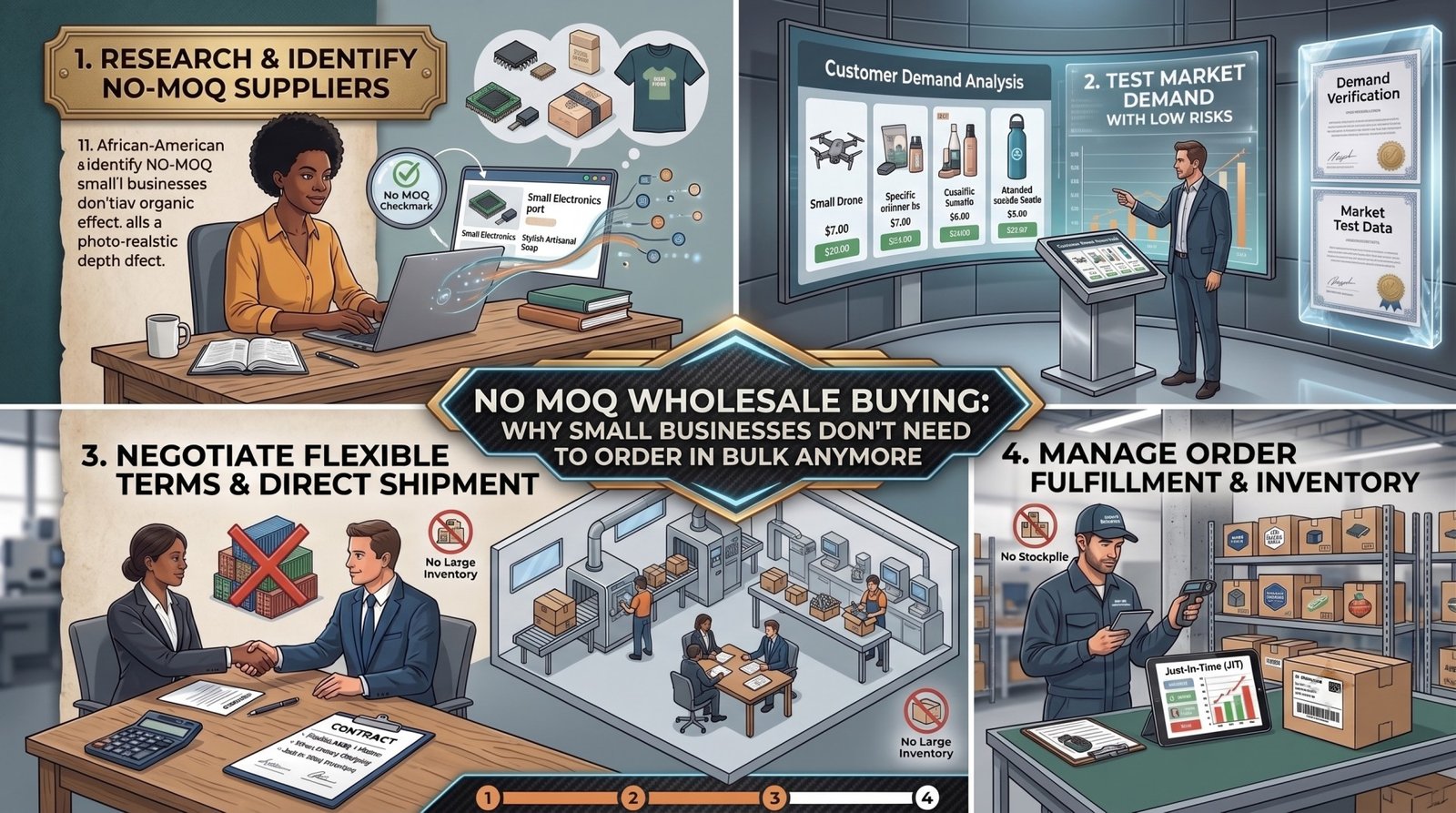
Start with smaller quantities when possible, verify suppliers before making significant payments, request samples, document product specifications, and compare the complete landed cost rather than looking only at the factory price.
With the right sourcing process, businesses can build stronger supplier relationships and create a more efficient wholesale procurement strategy.